

The study of demonology is not an endorsement of supernatural belief but a critical examination of historical, cultural, and religious phenomena that have profoundly shaped law, art, and society. For the serious researcher, student, or creative professional, navigating the vast corpus of texts—from medieval grimoires to modern academic studies—requires a curated, analytical approach. This guide provides a foundational reading list for anyone seeking to understand this complex subject through a historical and scholarly lens.
This annotated bibliography, developed for the Hidden Mythos archive, eschews sensationalism to present some of the best books on demonology available. Each entry is selected for its historical significance, scholarly utility, and its capacity to illuminate how demonic entities were reportedly understood, categorized, and engaged with in specific contexts. We will evaluate key primary sources, essential reference works, and critical historical analyses, providing a roadmap for building a library grounded in documented belief rather than modern fiction.
This list is structured to help you find the right resources for your specific needs, whether you are an academic researcher, a writer seeking authentic source material, or a folklore enthusiast. We provide direct links and detailed evaluations for each book, including notes on historical context, recommended translations, and audience suitability. This guide is designed to equip you with the textual tools necessary for a rigorous inquiry into one of history’s most persistent and complex subjects, moving beyond popular myth to engage with the primary documents and scholarly interpretations that form the bedrock of demonological study.
1. Hidden Mythos
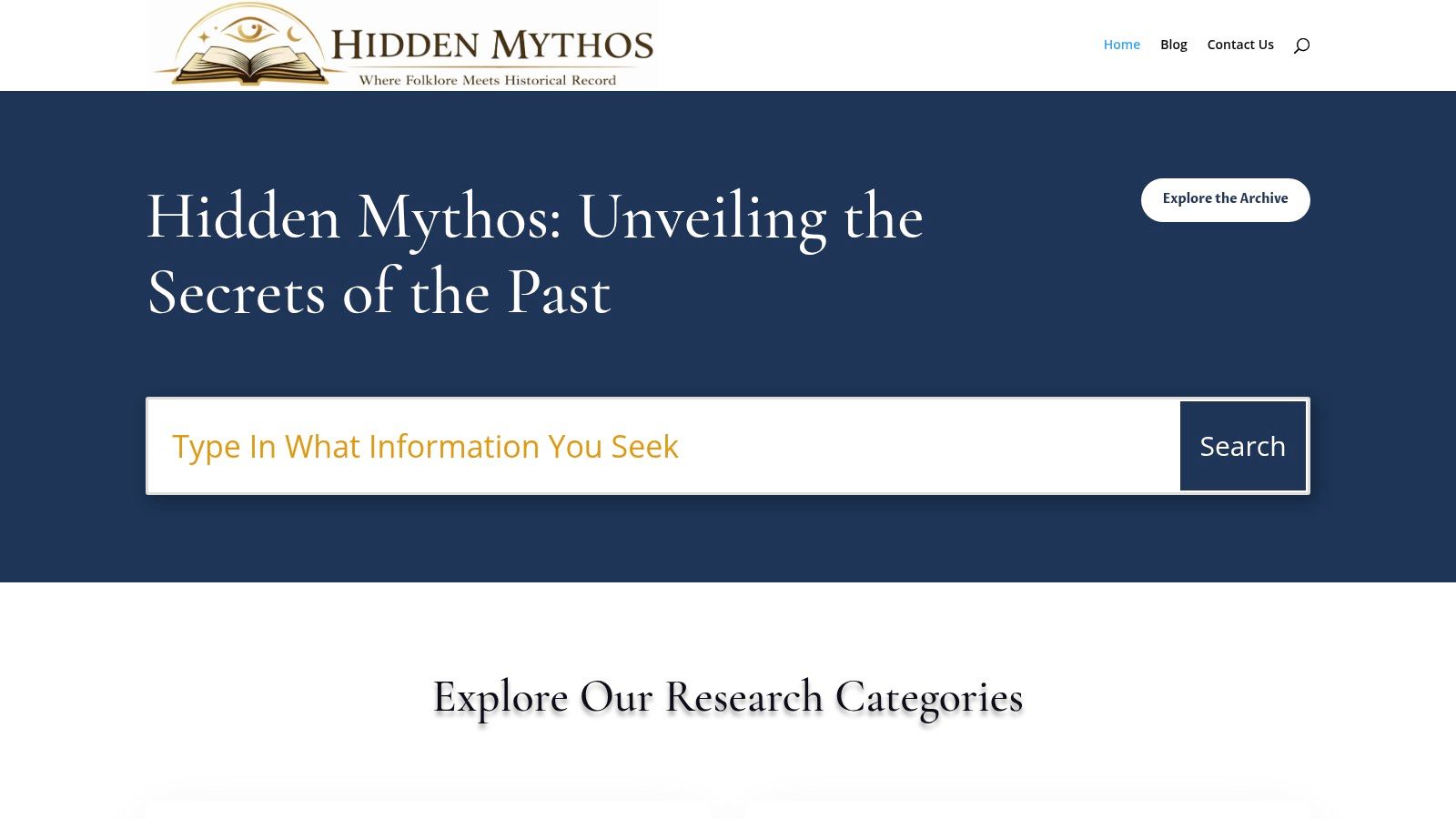
While a traditional book provides a static, in-depth view of a single subject, Hidden Mythos offers a dynamic, ever-expanding digital archive dedicated to the scholarly investigation of demonology, folklore, and occult history. Curated by independent researcher Michael Rupp, this platform distinguishes itself from sensationalist paranormal content by adopting a research-first methodology. It serves as an essential resource for anyone seeking historically grounded and source-based analysis, making it a powerful complement to any library of the best books on demonology.
The platform is meticulously organized into focused archives: Demonology & Occult Texts, Witchcraft & Historical Trials, and Mythology & Ancient Lore. This structure allows users to efficiently navigate complex subjects, from the etymology of specific demonic figures to the socio-political context of historical witchcraft accusations. Each article synthesizes primary sources and academic perspectives into accessible prose, making it equally valuable for a student writing a research paper, a game designer developing a world with authentic lore, or a historian cross-referencing folkloric traditions.
Key Strengths and Features
Hidden Mythos stands out for its commitment to academic rigor without the paywalls often associated with scholarly journals. Its value lies in its synthesis of credible information and its practical application for both research and creative projects.
Core Features Breakdown:
- Source-Based Analysis: Articles consistently reference primary texts, trial records, and historical documents, providing citations that allow readers to continue their research independently. The focus remains on documented beliefs and cultural phenomena rather than endorsing supernatural claims.
- Structured Archival System: The site’s clear categorization functions like a digital encyclopedia. Users can move from a general overview of a grimoire to a detailed analysis of a specific entity mentioned within it, creating an interconnected research experience.
- Accessible Scholarly Content: Rupp translates dense academic material and archaic texts into clear, engaging articles. This approach bridges the gap between specialized academic literature and the needs of a general but serious audience.
- Ongoing Research and Updates: The platform is not a static repository. The Hidden Mythos Chronicle newsletter provides ongoing findings, curated resource lists, and new articles, ensuring the content remains relevant.
Audience and Use Cases
The audience for Hidden Mythos is broad, spanning from academic researchers to creative professionals.
- For Academics and Students: It serves as an excellent starting point for research, offering clear summaries and pointing toward key primary and secondary sources in religious studies, history, and anthropology.
- For Writers and Creators: Game designers, filmmakers, and authors can find authentic, historically accurate details to build credible worlds and narratives, avoiding common clichés.
- For Independent Researchers: Those investigating paranormal topics from a historical perspective will find a wealth of contextual information, free from the unverified claims that dominate the genre online.
Access and Practical Information
Hidden Mythos is a free resource, with no visible paywalls or membership tiers. Access is open to all users directly through the website. The primary way to engage with the project’s ongoing work is by subscribing to the free email newsletter, which delivers exclusive content and updates. While it lacks formal institutional affiliation or a visible peer-review process, its authority is established through transparent, evidence-based content.
Visit the Website: https://www.hiddenmythos.com
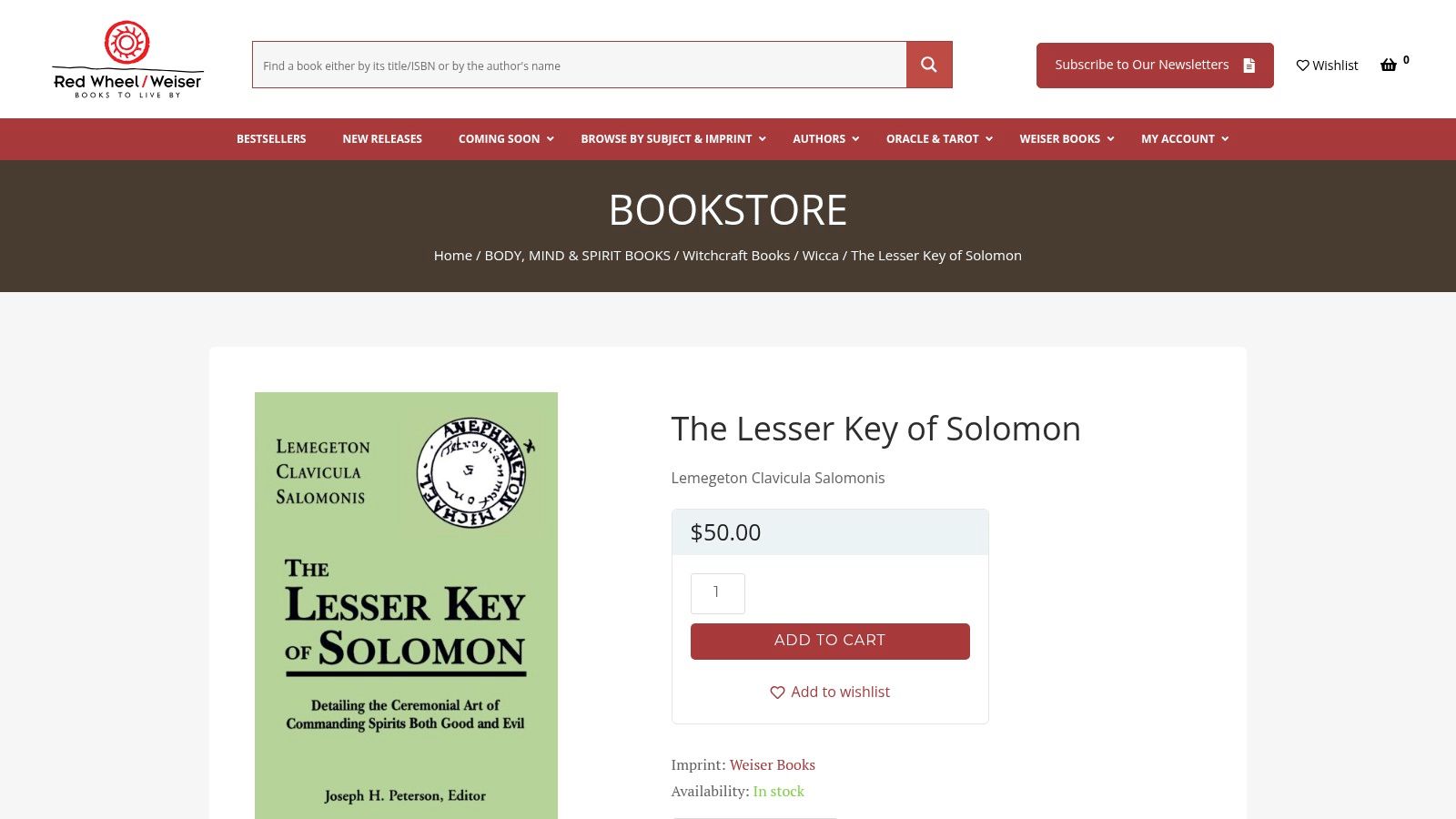
2. The Lesser Key of Solomon (Lemegeton Clavicula Salomonis), ed. Joseph H. Peterson (Weiser Books, 2001)
Historical Origins and Context
Among the most influential primary source documents in the Western grimoire tradition is The Lesser Key of Solomon, a composite text compiled in the mid-17th century from earlier materials. Its origins are complex, drawing on a lineage of Solomonic magical texts that circulated in manuscript form for centuries. This work codifies a system of ritual magic predicated on summoning and controlling a hierarchy of 72 spirits or demons, purportedly first commanded by the biblical King Solomon. For researchers, it is a crucial document not for its supernatural claims, but for what it reveals about early modern occult philosophy, the syncretism of Christian and pre-Christian beliefs, and the structured methodologies of ceremonial magic.
The Definitive Scholarly Edition
Joseph H. Peterson’s critical edition, published by Weiser Books, serves as the definitive scholarly baseline for this text. It consolidates the five distinct books of the Lemegeton (Ars Goetia, Ars Theurgia-Goetia, Ars Paulina, Ars Almadel, and Ars Notoria) from multiple British Library manuscripts into a single, meticulously annotated volume. This academic rigor allows readers to understand the text not as a monolithic document but as an evolved compilation, providing a clear window into the history of Solomonic ritual magic.
Why This Edition Is Essential
Unlike sensationalized or incomplete versions, Peterson’s work is prized for its fidelity to the source material. He provides a detailed introduction, extensive footnotes comparing manuscript variants, and a helpful index, moving beyond mere reprinting to a work of textual scholarship.
- Scholarly Standard: It is the most frequently cited edition in academic papers and serious occult studies.
- Complete Text: Includes all five books of the Lemegeton, which are often published separately.
- Critical Apparatus: Footnotes and variant readings are invaluable for textual analysis.
- Limitations: The content is specific to the European Solomonic tradition. It does not include facing-page manuscript transcriptions, which may be a drawback for advanced linguistic research.
This edition is not a casual read but a foundational document. For students, historians, and researchers aiming to study the grimoires as historical and cultural artifacts, Peterson’s Lesser Key of Solomon is an indispensable starting point.
Get the book from the publisher: The Lesser Key of Solomon at Weiser Books
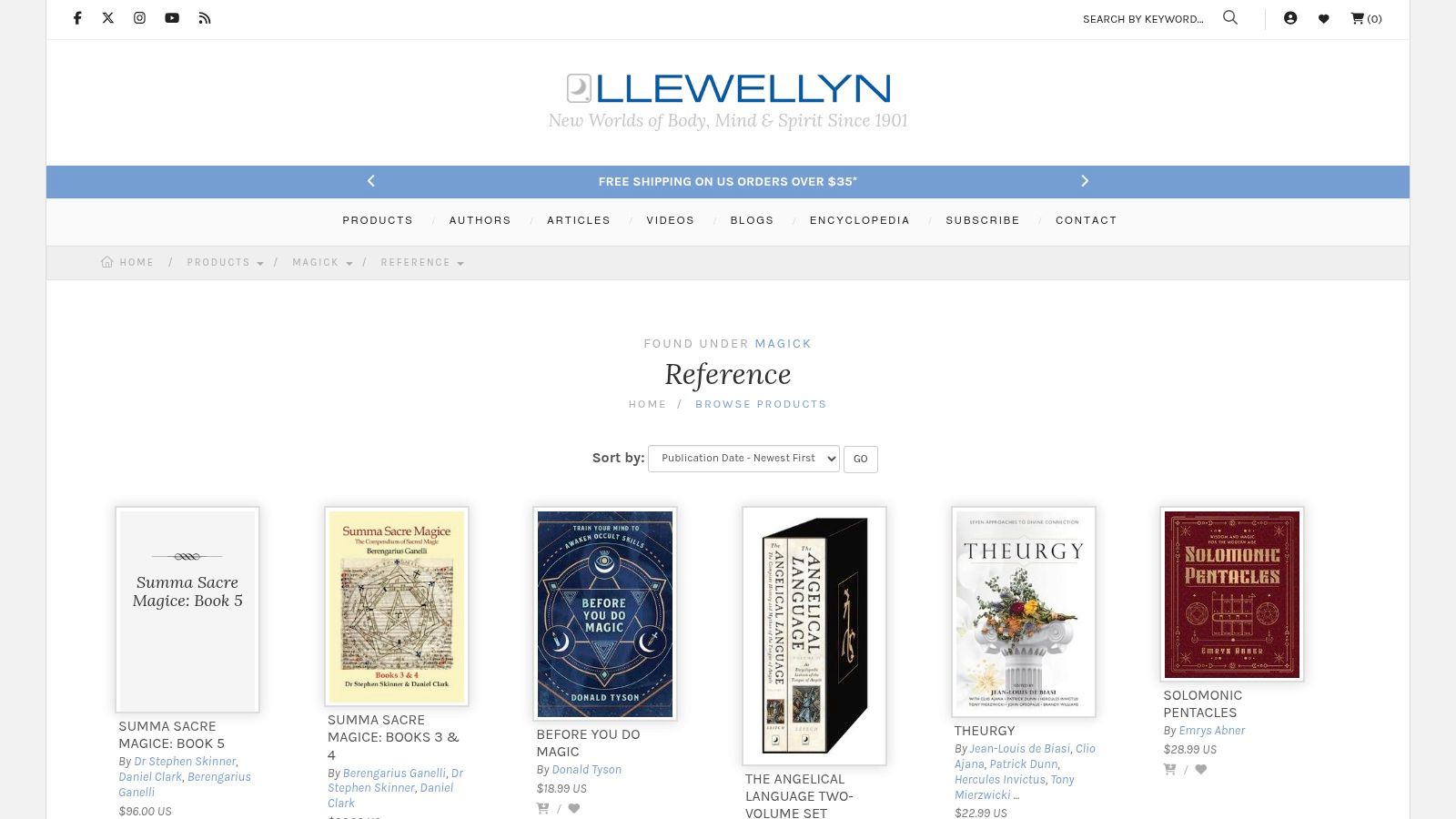
3. The Dictionary of Demons: Expanded & Revised—Names of the Damned, M. Belanger (Llewellyn Publications, 2021)
The Need for a Demonological Lexicon
As demonological lore developed over centuries, the names, attributes, and origins of entities became a complex and often contradictory web of information. Texts like the Pseudomonarchia Daemonum (1577) and later grimoires attempted to create ordered catalogs. In the modern era, researchers need a comprehensive reference work to navigate this dense field. M. Belanger’s The Dictionary of Demons: Expanded & Revised serves this exact purpose, acting as a broad, cross-referential index to the names, origins, and sources of entities found in Western occult folklore.
A Modern Reference Tool
This volume compiles over 1,700 entries, making it one of the most accessible modern compendiums for the study of demonology. Belanger’s work is not a primary source but a secondary compilation designed for utility. It aggregates information from a wide array of historical texts, providing brief, digestible entries on each entity. The consistent structure, which often includes variant spellings and source citations, is particularly helpful for tracing a specific figure’s appearance across different manuscripts and traditions.
Scholarly and Creative Utility
The strength of Belanger’s work lies in its breadth and accessibility. While primary grimoires require deep historical analysis, this dictionary functions as a field guide. The expanded and revised edition includes updated articles, new illustrations, and useful appendices.
- Extensive Index: It is one of the most comprehensive single-volume indexes of Western demon names available today.
- User-Friendly: The alphabetical, encyclopedic format makes it easy to quickly find information.
- Helpful for Creatives: An excellent resource for writers and game designers seeking authentic names and attributes.
- Limitations: As a secondary source, the depth of entries can vary. Its scope is largely confined to European and Abrahamic traditions.
The Dictionary of Demons is an essential desktop reference, not a deep academic analysis. For anyone needing to quickly identify a name from a historical text or find inspiration grounded in folklore, Belanger’s guide is an indispensable tool for practical use.
Get the book from the publisher: The Dictionary of Demons at Llewellyn Publications
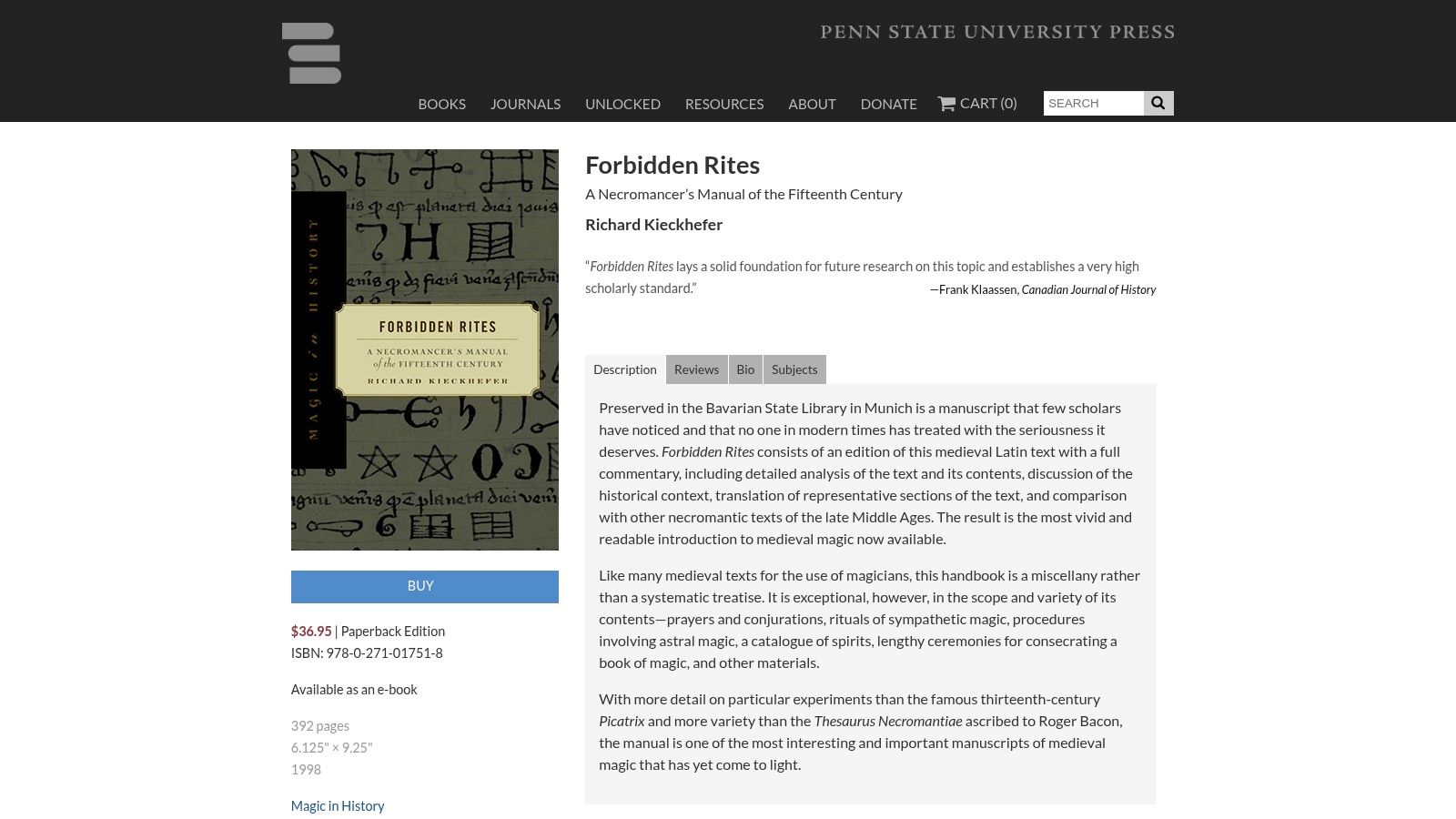
4. Forbidden Rites: A Necromancer’s Manual of the Fifteenth Century, Richard Kieckhefer (Penn State University Press, Magic in History)
Historical Context of Ritual Magic
To understand demonology not just as a list of names but as a documented historical practice, one must turn to the sources practitioners themselves created. In late medieval Europe, learned magic, or nigromantia, was a clandestine art practiced by a small, educated elite, often clerics. These practices existed at the dangerous intersection of Christian theology, astrological science, and folk belief. The Munich Manual of Demonic Magic (CLM 849), a key 15th-century manuscript, provides a rare, detailed look into this world.
A Window into a Necromancer’s World
Richard Kieckhefer’s Forbidden Rites presents a critical study and partial translation of this necromancer’s handbook. Published by Penn State University Press, this work is indispensable for researchers wanting to ground their understanding of demonology within the social and religious context of the era. Kieckhefer situates the grimoire’s rituals—which range from illusion and divination to more coercive acts—within the intellectual and illicit magical landscape of the time, providing a necessary bridge between folklore and historical documentation.
Scholarly Importance
Unlike encyclopedic works that catalog demons, Forbidden Rites examines the application of demonological belief. As part of the peer-reviewed “Magic in History” series, this book offers academic credibility and a rigorous, source-based analysis.
- Historical Context: Superb at connecting the grimoire text to the social, religious, and intellectual history of the late Middle Ages.
- University Press Rigor: Peer-reviewed scholarship provides a reliable and authoritative analysis suitable for academic research.
- Focus on Practice: It illuminates demonology as a practical, albeit forbidden, art within a specific historical setting.
- Limitations: It does not provide a full translation of the entire Latin manuscript, focusing instead on key selections for analysis. Its scope is tightly confined to a single manuscript.
For the student of history or researcher investigating the practical dimensions of Western occultism, Kieckhefer’s Forbidden Rites is not just a book about demons; it is a window into the mind of a medieval magician.
Get the book from the publisher: Forbidden Rites at Penn State University Press
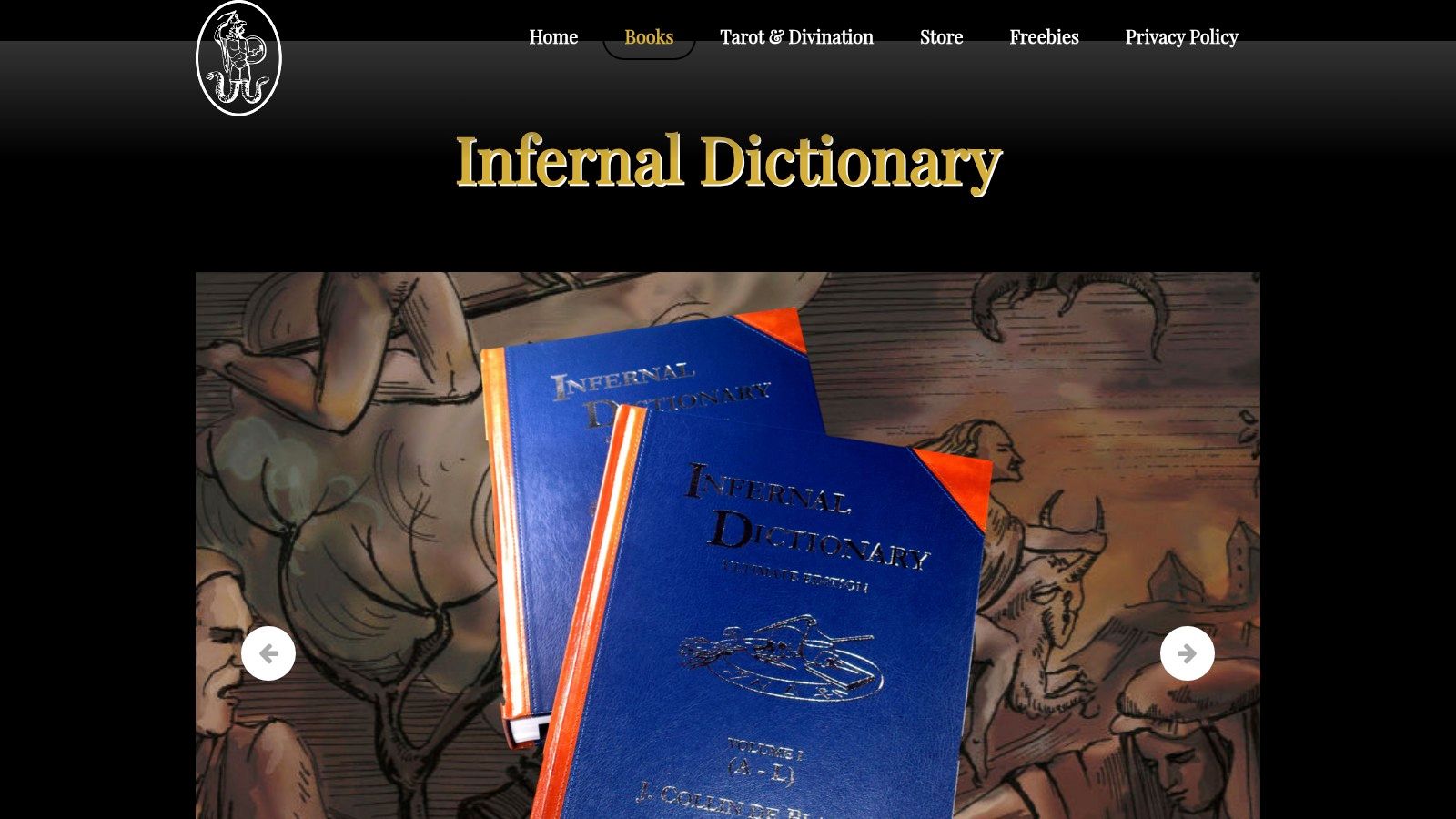
5. Infernal Dictionary (Dictionnaire Infernal), J.-A.-S. Collin de Plancy; Deluxe English translation (Abracax House)
The 19th-Century Occult Revival
The 19th century saw a resurgence of interest in occultism, spiritualism, and demonology, fueled by Romanticism and a fascination with the medieval past. It was in this context that Jacques-Auguste-Simon Collin de Plancy published his Dictionnaire Infernal in 1818, revising it multiple times over his lifetime. The definitive 1863 edition, famously illustrated by Louis Breton, became a cornerstone document of this revival. It is less a grimoire of ritual and more a historical and cultural encyclopedia reflecting its era’s understanding of demonic folklore.
The Definitive Iconographic Source
For researchers focused on the iconography and cultural reception of demons, the deluxe two-volume English translation from Abracax House is a foundational document. It presents the complete 1863 edition with its full suite of over 500 engravings, which have profoundly influenced modern depictions of demons in media and art. This set allows art historians, folklorists, and students of paranormal history to trace the visual lineage of demonic figures beyond earlier, unillustrated grimoires.
Why This Edition Is Unique
The Abracax House edition is a significant scholarly contribution, providing the complete text and iconography to an English-speaking audience. The publisher has supplemented the core text with valuable research aids, including footnotes and detailed indices.
- Complete Iconography: The only English edition to reproduce the entire set of Louis Breton engravings from the 1863 source.
- High Production Value: A durable set designed for serious research and long-term use.
- Scholarly Apparatus: Includes footnotes and cross-references that aid in historical analysis.
- Limitations: The high cost makes it a significant investment. While annotated, it is primarily a translation, not a full critical edition analyzing de Plancy’s sources.
This edition of the Infernal Dictionary is indispensable for anyone studying the visual culture of demonology. It is a vital resource for understanding how demonic folklore was documented, visualized, and popularized.
Get the book from the publisher: Infernal Dictionary at Abracax House
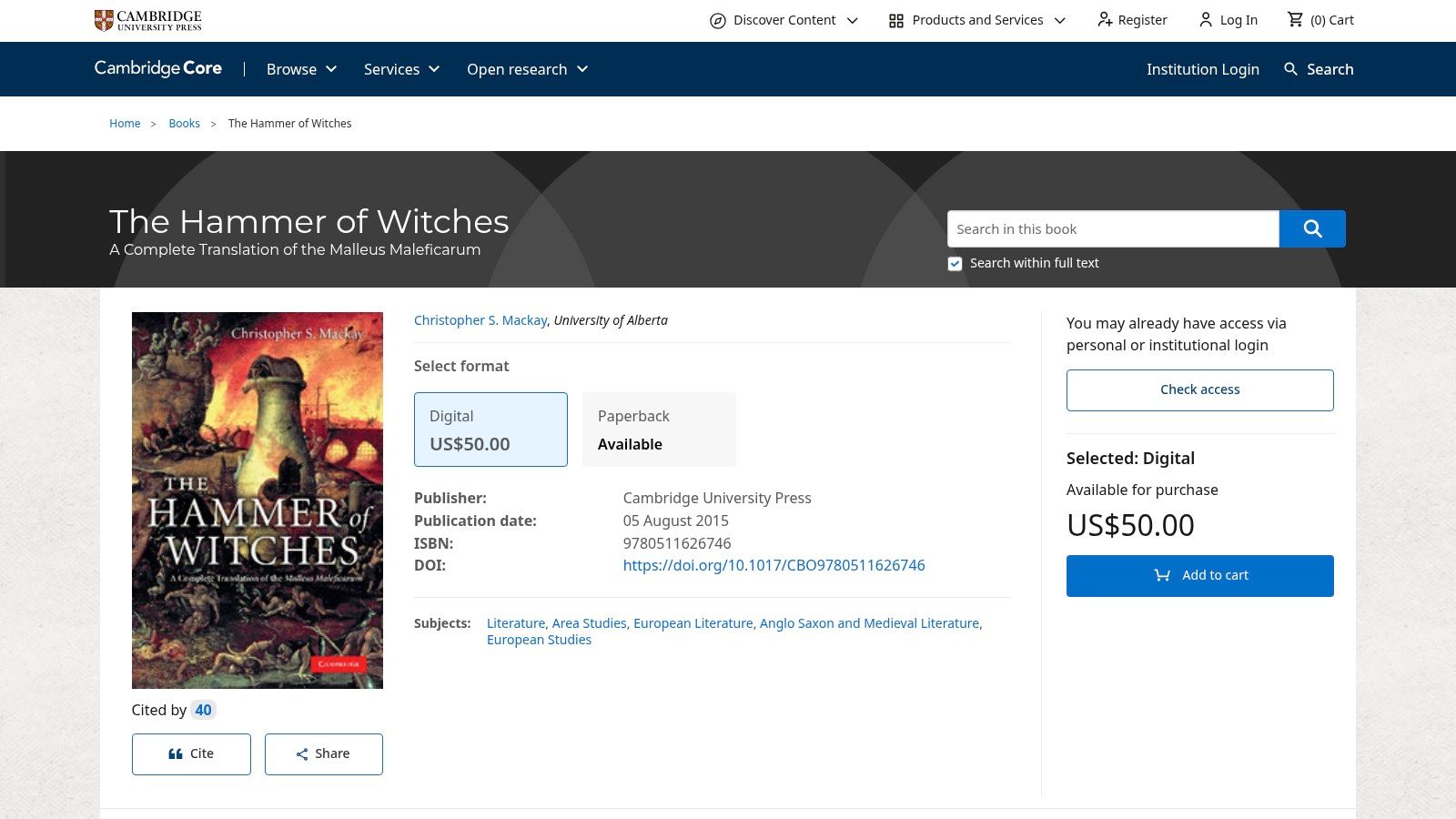
6. The Hammer of Witches: A Complete Translation of the Malleus Maleficarum, trans. Christopher S. Mackay (Cambridge University Press)
Historical Origins and Influence
First published in 1487, the Malleus Maleficarum (The Hammer of Witches) by Heinrich Kramer became one of the most infamous books of the Renaissance. Written as a guide for inquisitors, it sought to prove the reality of witchcraft, provide a theological framework for its prosecution, and offer detailed legal procedures for trying accused witches. Although its initial official sanction is debated by historians, its printing and widespread distribution contributed to the intense period of witch trials in early modern Europe. To understand the mechanics of this era, particularly how demonological theory was codified into legal and theological doctrine, one must engage with this primary source.
The Authoritative Scholarly Edition
Christopher S. Mackay’s complete translation from Cambridge University Press is the authoritative scholarly edition for English-speaking researchers. It provides an unfiltered, academically rigorous look into the 15th-century mindset that systematized the persecution associated with the European witch hunts. Unlike abridged or sensationalized versions, Mackay’s translation includes an extensive introduction that situates the text within its complex social and religious context, along with copious footnotes that are essential for dissecting its theological arguments and legal precedents.
Why This Edition Is Essential
Cambridge University Press provides a gold-standard academic product. Mackay’s translation is prized for its accuracy and preservation of the original’s formal, argumentative tone.
- Scholarly Standard: The most respected and cited modern English translation for academic work.
- Rich Context: The introduction and notes are invaluable for understanding the text’s historical and theological framework.
- Complete Text: Provides a full, unabridged translation of all three parts of the Malleus.
- Limitations: This is a dense legal and theological treatise, not a grimoire. Its scholastic argumentation can be challenging for casual readers.
This edition is not for the curious browser but for the dedicated researcher. For anyone studying the intersection of law, religion, and demonological belief in early modern Europe, Mackay’s translation of the Malleus Maleficarum is an essential, if unsettling, resource.
Get the book from the publisher: The Hammer of Witches at Cambridge University Press
7. Witches, Devils, and Doctors in a Post-Reformation World: Johann Weyer, De praestigiis daemonum, ed. George Mora; trans. John Shea (MRTS/ACMRS Press)
A Renaissance Counter-Argument
While texts like the Malleus Maleficarum fueled the witch-hunting fervor, a number of dissenting voices emerged. Among the most significant was Johann Weyer, a Dutch physician who published De praestigiis daemonum (On the Illusions of Demons) in 1563. Weyer’s work stands as a monumental counter-argument to the persecutions of its time. He did not deny the existence of the devil, but he argued forcefully that most accused witches were not malicious agents of Satan but were, in fact, suffering from mental illness, which he attributed to “melancholy.” This reframing of the issue from a legal and theological problem to a medical one was a radical and courageous act.
An Essential Scholarly Translation
The English translation published by ACMRS Press, edited by George Mora, offers a complete and accessible version of this foundational text. This edition is far more than a simple translation; it frames Weyer’s work within its proper context, presenting his arguments as those of a deeply religious physician attempting to separate demonic influence from what he identified as natural ailments. The book provides an essential, humanizing counterpoint to the dominant witch-hunting manuals, showing that the discourse on demonic influence was far from monolithic.
Importance for Historical Research
Published as part of the Medieval and Renaissance Texts and Studies (MRTS) series, this volume is designed for academic use. The introduction and notes provide the necessary historical and medical background for researchers.
- Essential Counter-Narrative: Provides a critical, contemporary dissenting voice to the dominant witch-hunting manuals.
- Scholarly Apparatus: The introduction and footnotes are invaluable for understanding the text’s complex medical and theological arguments.
- Complete Translation: Offers the full text of a historically significant but often overlooked primary source.
- Limitations: As an academic press book, it can be expensive and sometimes difficult to find in print. It does not include the original Latin text for comparison.
For historians studying the intellectual history of witchcraft and demonology, this edition of Weyer’s work is indispensable. It challenges simplistic narratives and reveals the nuanced debates that shaped early modern European thought on demonic power and human fallibility.
Get the book from the publisher: Witches, Devils, and Doctors at ACMRS Press
Conclusion: A Balanced Approach to Demonological Texts
The study of demonology through these historical and scholarly texts is an exercise in intellectual history, not an endorsement of supernatural claims. The curated works on this list offer a balanced and context-rich pathway into understanding how demonic figures were conceptualized, cataloged, and responded to across different eras. From the ritualistic frameworks of the Lesser Key of Solomon to the legalistic terror of the Malleus Maleficarum and the medicalized skepticism of Johann Weyer, these documents reveal the complex interplay of religion, law, folklore, and science.
A rigorous approach requires treating these books as primary sources—artifacts that reflect the anxieties, beliefs, and intellectual currents of their time. By placing them in dialogue with one another, a researcher can move beyond sensationalism to appreciate the profound impact that demonological concepts have had on Western culture. This collection serves as a foundational library for anyone committed to a serious, historically grounded investigation of this enduring and multifaceted subject.
For continued, in-depth analysis of these texts and other primary source documents, explore the Hidden Mythos archive. We provide historically grounded research that places these complex subjects within their proper cultural context, helping you separate documented belief from modern fiction. Visit us at Hidden Mythos to deepen your understanding.
Frequently Asked Questions (FAQ)
What is demonology?
Demonology is the historical and systematic study of demons or beliefs about demons. In an academic and historical context, it examines how different cultures and religions have conceptualized, classified, and depicted non-divine or malevolent spiritual entities. It is a subfield of religious studies, folklore, and history, distinct from the practice or endorsement of any related beliefs.
Are these books safe to read?
Yes. The books on this list are presented as historical and scholarly documents. They are intended for academic, research, and creative purposes. This guide does not endorse or provide instructions for any rituals, summoning, or spiritual practices. Reading these texts for historical understanding is no different from studying any other historical document or mythological system.
Where should I start if I’m a beginner?
For a broad and accessible overview, a reference work like M. Belanger’s The Dictionary of Demons provides a good starting point for familiarizing yourself with key names and concepts. For a deeper dive into historical context, Richard Kieckhefer’s Forbidden Rites is an excellent academic analysis that frames magical practice within its late medieval worldview.
What is the difference between a grimoire and a demonology text?
A grimoire (e.g., The Lesser Key of Solomon) is a textbook of magic, typically containing instructions for creating talismans, performing spells, and conjuring spirits. A demonology text, in a broader sense, can be any work that studies, catalogs, or describes demons. This includes theological treatises like the Malleus Maleficarum and encyclopedic works like Collin de Plancy’s Infernal Dictionary, neither of which are primarily instructional grimoires.
Why is the Malleus Maleficarum included in a list about demonology?
The Malleus Maleficarum is included because it provides one of the most comprehensive theological frameworks for demonology from the early modern period. It systematically argues for the active role of demons in the world, details how they allegedly interact with humans (specifically witches), and outlines the supposed mechanics of demonic temptation and influence. It is a foundational text for understanding how demonological theory was applied within a legal and prosecutorial context.
