

American folklore is not a static collection of tales but a dynamic record of a nation’s composite history, values, and anxieties. It functions as an unofficial cultural autobiography, chronicled through the narratives, beliefs, and traditions that have shaped American identity from its Indigenous origins to the present digital age. This guide offers a research-driven analysis of these traditions, framing them as historical and cultural phenomena worthy of scholarly examination.
Introduction: The Scope and Significance of American Folklore

The study of American folklore encompasses a vast and evolving cultural tapestry. Far from being simple entertainment, these narratives represent the active, ongoing process by which communities interpret their environment, their past, and their future. They are, in effect, historical documents that articulate the hopes, fears, and moral frameworks of the people who transmit them. While formal history prioritizes official records and prominent figures, folklore provides a grassroots perspective, preserving cautionary tales, heroic sagas, and communal beliefs.
The discipline of folklore extends beyond oral narratives. The term American folklore and legend is an umbrella covering a wide range of cultural expressions, each offering a distinct lens into a community’s shared experience:
- Oral Traditions: Myths, legends, tall tales, ballads, and jokes transmitted verbally.
- Belief Systems: Superstitions, folk medicine, and reported encounters with the supernatural, representing attempts to explain phenomena outside the bounds of conventional understanding.
- Material Culture: Handcrafted objects, from quilts to folk art, that embody cultural narratives and aesthetic values.
- Social Folk Custom: Rituals, festivals, and community observances that reinforce shared identity and social norms.
By treating these expressions as cultural artifacts, researchers can decode the underlying social currents of a given time and place. A story of a phantom hitchhiker, for example, may reflect societal anxieties regarding new transportation technologies or the perceived dangers of modern mobility.
A historical examination of these traditions offers an invaluable window into the formation of a national identity. It reveals a history more complex and multifaceted than standard textbook accounts—one filled with the distinct voices of Indigenous nations, European colonists, enslaved Africans, and successive waves of immigrants. Each group contributed its own narratives, which merged, conflicted, and evolved into a uniquely American mythos. Understanding the distinction between story types is crucial; our guide on myth versus legend provides further clarification.
Historical Origins: The Foundational Streams of American Narrative
The origins of American folklore cannot be traced to a single point but are best understood as a convergence of distinct cultural streams. This narrative tradition is a braided river, with currents flowing from across the globe mingling with the ancient traditions indigenous to the continent.
Indigenous Oral Traditions
The bedrock of the continent’s narrative tradition is Indigenous. For millennia, hundreds of distinct nations developed intricate oral traditions detailing cosmologies, creation stories, and community histories. These narratives were inseparable from the lands they inhabited, functioning as living libraries of ecological knowledge, spiritual principles, and cultural values. From Algonquin accounts of the Wendigo—a spirit reportedly born from winter starvation and cannibalism—to the complex oral epics of the Haudenosaunee (Iroquois) Confederacy, these traditions constitute the continent’s foundational mythos.
European Colonial Beliefs
The arrival of European colonists in the 17th century initiated a dramatic and often violent cultural exchange. Colonists carried with them a significant corpus of folk beliefs, superstitions, and religious anxieties. English settlers, for instance, brought tales of fairies, witches, and diabolical pacts, which acquired a new, often more menacing, resonance in the unfamiliar American wilderness.
These imported fears contributed to some of America’s earliest instances of mass hysteria. Belief in witchcraft, a direct transplant from European folk and religious traditions, festered in the colonies and ultimately erupted into the historical tragedy of the Salem Witch Trials. A detailed analysis of this event is available in our article on what really happened during the Salem Witch Trials. This period was marked by a volatile syncretism, where Old World anxieties were projected onto a New World landscape and Indigenous spirits were often reinterpreted through a Christian lens as demonic entities.
African American Oral Heritage
The transatlantic slave trade forcibly brought millions of Africans to America, who carried with them a vibrant and resilient body of West and Central African folklore. This cultural inheritance became a powerful tool for survival, identity preservation, and resistance within the brutal system of slavery. These traditions introduced new and potent archetypes into the American mythological landscape:
- The Trickster Figure: Embodied most famously by Br’er Rabbit, the trickster is a small, clever protagonist who uses wit to outmaneuver powerful oppressors. For enslaved people, these tales were not mere entertainment but allegories for survival that celebrated intelligence over force.
- Spirit and Conjure Beliefs: Spiritual traditions, often referred to as Hoodoo or conjure, developed from a synthesis of African spiritual practices, Christian elements, and Indigenous herbal knowledge. Stories of “haints” (ghosts), powerful root doctors, and spiritual protection became a vital component of African American folklore.
These narratives were acts of cultural preservation and defiance, providing a means to maintain identity, transmit wisdom, and navigate a hostile world. The blending of these three primary streams—Indigenous, European, and African—is a defining characteristic of American folklore. It is a story of adaptation, conflict, and syncretism.
The Frontier and Immigrant Contributions
As the nation expanded westward, the frontier itself became a powerful engine of myth-making. The vast and untamed landscape gave rise to a uniquely American genre: the tall tale. This form produced larger-than-life heroes like Paul Bunyan and Davy Crockett, whose exaggerated exploits mirrored the nation’s expansionist ambitions and anxieties. Later, as immigrants arrived from Ireland, Germany, Italy, China, and elsewhere, the cultural tapestry grew richer. Each group introduced its own narratives, from Irish Banshees to Eastern European vampires, adding new threads to the evolving American story.
Development Over Time: The Evolution of Folk Traditions
The history of American folklore is one of continuous adaptation, reflecting the nation’s own technological, social, and demographic transformations. It charts a course from localized oral tales to nationally recognized legends, shaped by mass media and new societal anxieties.
Initially, these traditions were intensely local, transmitted orally within small, often isolated communities. A story about a regional cryptid or a haunted landmark belonged to the people of that specific place, its meaning deeply embedded in their daily lives and the challenges of a frontier environment.
The Influence of Mass Media
The 19th century introduced a transformative element: mass media. The penny press and popular almanacs acted as amplifiers, taking regional tales and disseminating them to a national audience. A story that once belonged to a single village could now traverse the continent, capturing the imagination of a much wider readership. This process often standardized narratives, sanding down local variations to create archetypal figures. Paul Bunyan, for example, originated as a folk hero among loggers in the Great Lakes region, but his modern persona was largely shaped and embellished by commercial writers, marking a shift from a purely oral tradition to one influenced by media.
The evolution of American folklore directly mirrors the nation’s own development. As America transitioned from an agrarian society to an industrial one, its stories shifted from the natural world to the built environment, reflecting new anxieties about technology, urbanization, and social decay.
The Emergence of the Urban Legend
As the United States became increasingly urbanized in the 20th century, a new form of folklore emerged. The urban legend replaced forest monsters with phantom hitchhikers on lonely highways, contaminated consumer products, and criminals hiding in domestic spaces. These modern cautionary tales served the same function as older folklore—articulating community anxieties and reinforcing social norms—but their content reflected contemporary fears:
- Technological Anxiety: Stories often centered on the perceived dangers of new technologies, from microwave ovens to automobiles.
- Social Distrust: Many legends expressed a fear of strangers and the anonymity of urban life.
- Contamination Fears: Narratives of tainted products tapped into modern anxieties about mass production and corporate oversight.
This demonstrates the adaptive nature of folklore as an ongoing mechanism for processing and articulating the challenges of the contemporary world.
Modern Scholarly Perspectives
The academic study of folklore has also shaped our understanding of these traditions. Scholars have meticulously documented how narratives travel and transform, revealing their deep connections to societal values. This research also highlights a contemporary challenge: the erosion of traditional folk knowledge. A 2023 study from South Dakota, for example, reported a significant decline in the recognition of classic American folk figures among younger generations. Recognition for Paul Bunyan and Johnny Appleseed was 40-60% lower among respondents under 30 compared to those over 60. The full findings on generational folklore awareness underscore a critical shift in how these traditions are being transmitted and preserved.
Cultural and Religious Context: Archetypes and Their Meanings
To fully comprehend American folklore, one must look beyond the surface narratives to the underlying archetypes. The most enduring characters are rarely just individuals; they are symbolic figures that embody a society’s core values, aspirations, and fears. Recognizing these recurring patterns provides insight into the cultural function of these stories.
These archetypes form the framework of a national mythology, offering communities a means to interpret their world, celebrate cultural ideals, or issue warnings against transgression. Each figure, from the superhuman laborer to the cunning trickster, reflects the culture that produced it.
The Larger-Than-Life Hero
A prominent archetype in American folklore is the hero of the tall tale, such as Paul Bunyan and John Henry. These figures were not merely sources of entertainment but personifications of America’s industrial and expansionist drive in the 19th century. They represented ideals of relentless work, superhuman strength, and the power to domesticate a wild continent. The legend of John Henry, an African American folk hero, presents a more tragic narrative about the Industrial Revolution. His celebrated contest against a steam-powered drill is a powerful allegory for the conflict between human labor and mechanization. His victory, which comes at the cost of his life, is both a tribute to human endurance and a commentary on the human cost of industrial progress.
Cautionary Monsters and Regional Phantoms
While heroes embodied cultural ambitions, monsters gave form to collective fears. American folklore is populated by cryptids and supernatural entities that serve as cautionary figures, reminding communities of the physical and moral dangers that lie beyond the established social order. These creatures often reflect the specific anxieties of their region of origin.
The Jersey Devil, a creature said to inhabit the Pine Barrens of Southern New Jersey, is a prime example. The most common origin story, dating to 1735, claims a mother named Jane Leeds cursed her thirteenth child, who was then born a monster. However, historical research suggests the legend may have originated as a political smear campaign. The Leeds family were prominent Quakers involved in local disputes. An almanac published by Titan Leeds featured a dragon-like creature on its family crest, which his rival publisher, Benjamin Franklin, reportedly used to mock him. Over time, the political context faded, but the image of the monster became embedded in local folklore as a genuine cautionary tale.
The Subversive Trickster
The trickster archetype, found worldwide, holds a particularly significant role in American folklore, especially within African American traditions. A figure like Br’er Rabbit represents more than a simple prankster; he is a symbol of how intelligence and resilience can overcome brute force and oppression. Rooted in the trickster tales of West and Central Africa, these narratives were adapted by enslaved people in the American South. In these stories, the small, seemingly vulnerable rabbit consistently outwits his larger adversaries, like Br’er Fox and Br’er Bear. On one level, these were entertaining animal fables. On a deeper level, they were allegories of survival. Br’er Rabbit’s triumphs were a form of symbolic resistance, demonstrating how the powerless could use their intellect to subvert the authority of the powerful.
Key Archetypes in American Folklore
The following table outlines prominent archetypes, connecting legendary figures to the cultural values and fears they represent.
| Figure/Legend | Archetype | Primary Cultural Origin | Represents |
|---|---|---|---|
| Paul Bunyan | The Larger-Than-Life Hero | 19th-Century Frontier / Logging | Manifest destiny, industrial might, taming the wilderness |
| John Henry | The Tragic Folk Hero | African American / Industrial | Human spirit vs. mechanization, dignity of labor, human cost of progress |
| Johnny Appleseed | The Benevolent Pioneer | Anglo-American / Frontier | Harmony with nature, pacifism, gentle expansion and cultivation |
| The Jersey Devil | The Cautionary Monster | Colonial / Regional (NJ) | Fear of the unknown, consequences of transgression, political anxieties |
| La Llorona | The Mourning Phantom | Hispanic / Southwest | Grief, loss, danger to children, water as a perilous space |
| Br’er Rabbit | The Subversive Trickster | African American / Southern | Resilience, wit over power, survival under oppression |
| Pecos Bill | The Exaggerated Cowboy | Anglo-American / Western | Frontier bravado, mastery over a harsh landscape, American exceptionalism |
| Captain Stormalong | The Mythic Sailor | Anglo-American / New England | Seafaring prowess, human dominance over the ocean, maritime ambition |
Modern Interpretation: Folklore in the Digital Age and Academia
The human impulse to tell stories and explain the unknown persists in the modern era, having adapted to new technological and social landscapes. American folklore has migrated from front porches to online forums and social media, where the digital campfire facilitates new forms of narrative creation.
The New Frontier of Digital Folklore
The digital age has spawned new genres of folklore. "Creepypasta," a term for short, user-generated horror stories spread online, functions as a modern form of the ghost story. The most notable example is Slender Man, which originated from photoshopped images on a comedy forum in 2009 and evolved into a global phenomenon through collaborative storytelling. Slender Man is a prime case study of what folklorists term "netlore"—folklore created and disseminated on the internet.
The web accelerates myth-making, allowing a legend that once took years to cross state lines to achieve global reach in days. This environment blurs the line between author and audience, as thousands of anonymous contributors add to a shared narrative. For researchers, this presents a challenge: how to archive a story that exists in countless versions across ephemeral platforms.
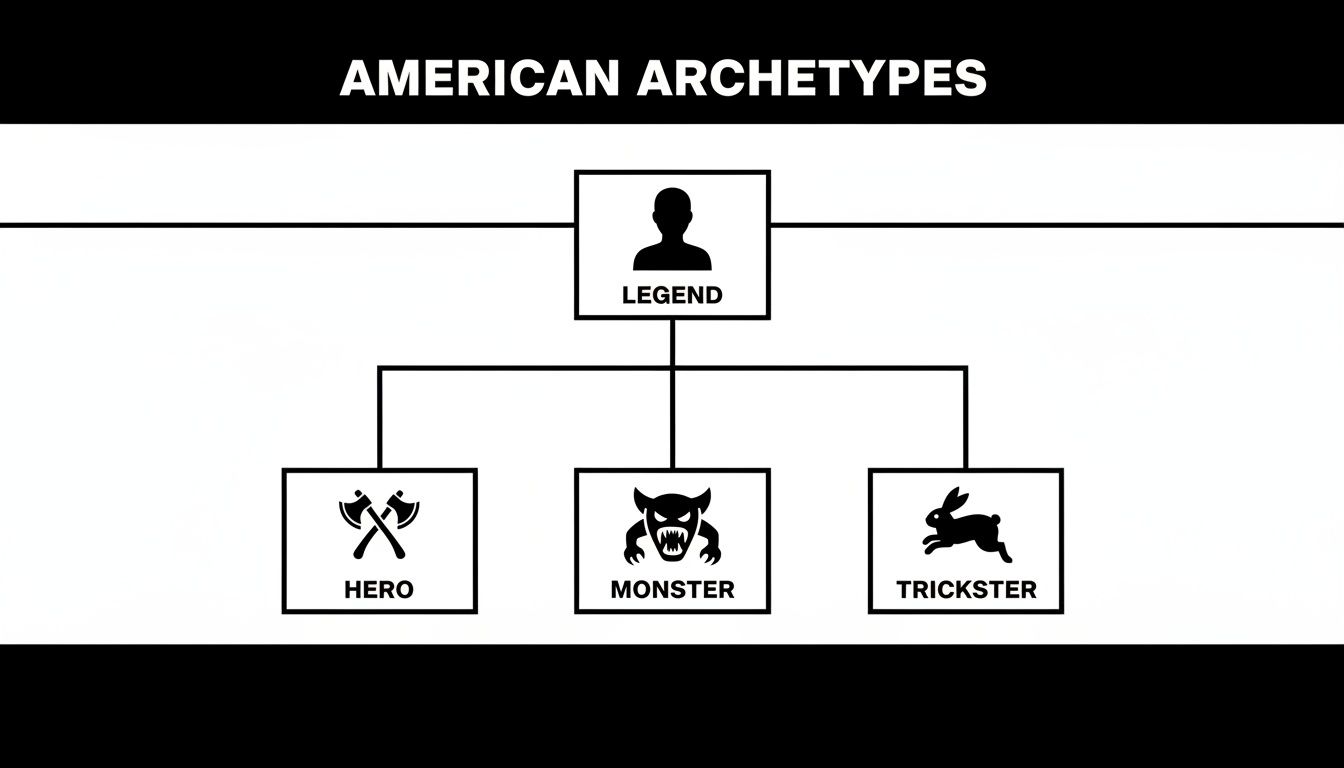
Even in this digital landscape, traditional archetypes—the Hero, the Monster, the Trickster—remain the foundational building blocks of narrative, reinterpreted for a contemporary audience.
Contemporary Debates in Folklore Studies
The academic field of folklore continues to evolve. A significant ongoing debate revolves around the concept of "fakelore," a term coined by folklorist Richard M. Dorson.
Fakelore refers to material presented as authentic folklore but which is, in fact, manufactured, often for commercial or political purposes. It is the popular culture commodification of a story that may have once grown organically from a community's experience.
The modern iteration of Paul Bunyan serves as a classic example. While tales of a giant logger circulated in timber camps, the nationally recognized version, complete with his blue ox, Babe, was heavily embellished and popularized by an advertising writer for the Red River Lumber Company in the early 20th century. Differentiating authentic tradition from manufactured myth is a central task for modern folklorists, a challenge also seen when examining folklore from around the world.
The scholarly community itself is also changing, becoming more representative of the diverse cultures it studies. A 2016 survey by the American Folklore Society indicated that while the field was still predominantly White (78%), this was a decrease from 89% in 2002. Over the same period, representation grew for Asian (6%), Latino/a (4%), and Native American (0.7%) scholars, with women comprising 63% of the Society's membership. This increasing diversity enriches the field, bringing new perspectives and ensuring that the traditions of all communities are documented and analyzed with appropriate cultural context and respect.
Conclusion: A Document-Based Approach to American Narratives
The body of American folklore and legend provides an invaluable repository of cultural and historical information. These narratives, whether rooted in historical events or imaginative speculation, offer a map of the American psyche, charting the nation’s struggles, aspirations, and the complex processes of identity formation.
By approaching these tales as cultural artifacts rather than as mere entertainment, one can analyze the historical and social forces that shaped them. This source-driven methodology prioritizes historical context over sensationalism. The objective is not to debunk or endorse but to allow the legends to speak for themselves as documents of belief.
The academic study of folklore remains a vital field. In the U.S., approximately 48 degrees in Folklore Studies are awarded annually, primarily at the master's level. This ongoing research confirms that the fundamental human need for storytelling persists, adapting its forms to reflect the concerns of each new era. Further information on this discipline can be found through resources on the academic study of American folklore.
The true value of folklore lies in its ability to capture the unofficial history of a people—the beliefs whispered around a fire, the warnings embedded in a local landmark, and the hopes shared through song and story.
Hidden Mythos is committed to this neutral, research-first methodology. Each story, from a cautionary tale about a local monster to the exploits of a tall-tale hero, is a piece of a larger cultural puzzle. By preserving and analyzing these narratives, we ensure that the grassroots history of the nation is not lost.
Frequently Asked Questions
A brief overview of common inquiries related to American folklore and legend.
What is the distinction between folklore, myth, and legend?
While often used interchangeably, these terms have specific meanings within folkloristics.
- Folklore is the broadest category, encompassing the entirety of a community's informally transmitted traditions—stories, crafts, customs, and beliefs.
- Myth refers to sacred, foundational narratives that explain fundamental questions about the world's origin and humanity's place within it. They are often central to a culture's spiritual or religious framework.
- Legend is a story presented as historical fact, often tied to a real place, person, or event, but which has been embellished through retelling. Examples include the tales of Johnny Appleseed or sightings of the Jersey Devil.
Are folk stories entirely fictional?
Many legends are rooted in a kernel of historical truth—a real person, place, or event. Davy Crockett was a historical frontiersman and politician, but the popular narratives about him greatly exaggerated his actual deeds. For a folklorist, the primary question is not whether a story is factually accurate, but why it is told and retold. The persistence of a story reveals much about a community’s values, fears, and collective memory.
A folklorist's objective is not to "debunk" a legend but to understand its cultural significance to the people who transmitted it. The cultural truth of a story often holds more weight than its historical veracity.
Why is American folklore so diverse?
The rich heterogeneity of American folklore is a direct reflection of the nation's complex history of migration and cultural interaction. It is not a monolithic tradition but a synthesis of countless cultural contributions:
- Indigenous Traditions: The foundational narratives of the continent, deeply connected to the American landscape.
- European Colonial Beliefs: Traditions from English, Dutch, French, and Spanish settlers that adapted to the New World environment.
- African and African American Contributions: Oral traditions, including trickster tales and spiritual beliefs, that were central to cultural resilience and identity.
- Immigrant Stories: Each successive wave of immigrants has added its unique narrative threads to the American cultural tapestry.
This continuous process of blending and borrowing is what defines the rich and complex character of American folklore and legend.
Hidden Mythos is a research archive built to explore folklore and mythology with a historian's eye. We work to separate documented belief from modern sensationalism. If you enjoyed this, feel free to browse our growing collection of articles.
